A Ceasefire deal is not a Peace deal… but it’s a great start and marks a turning point in this war!
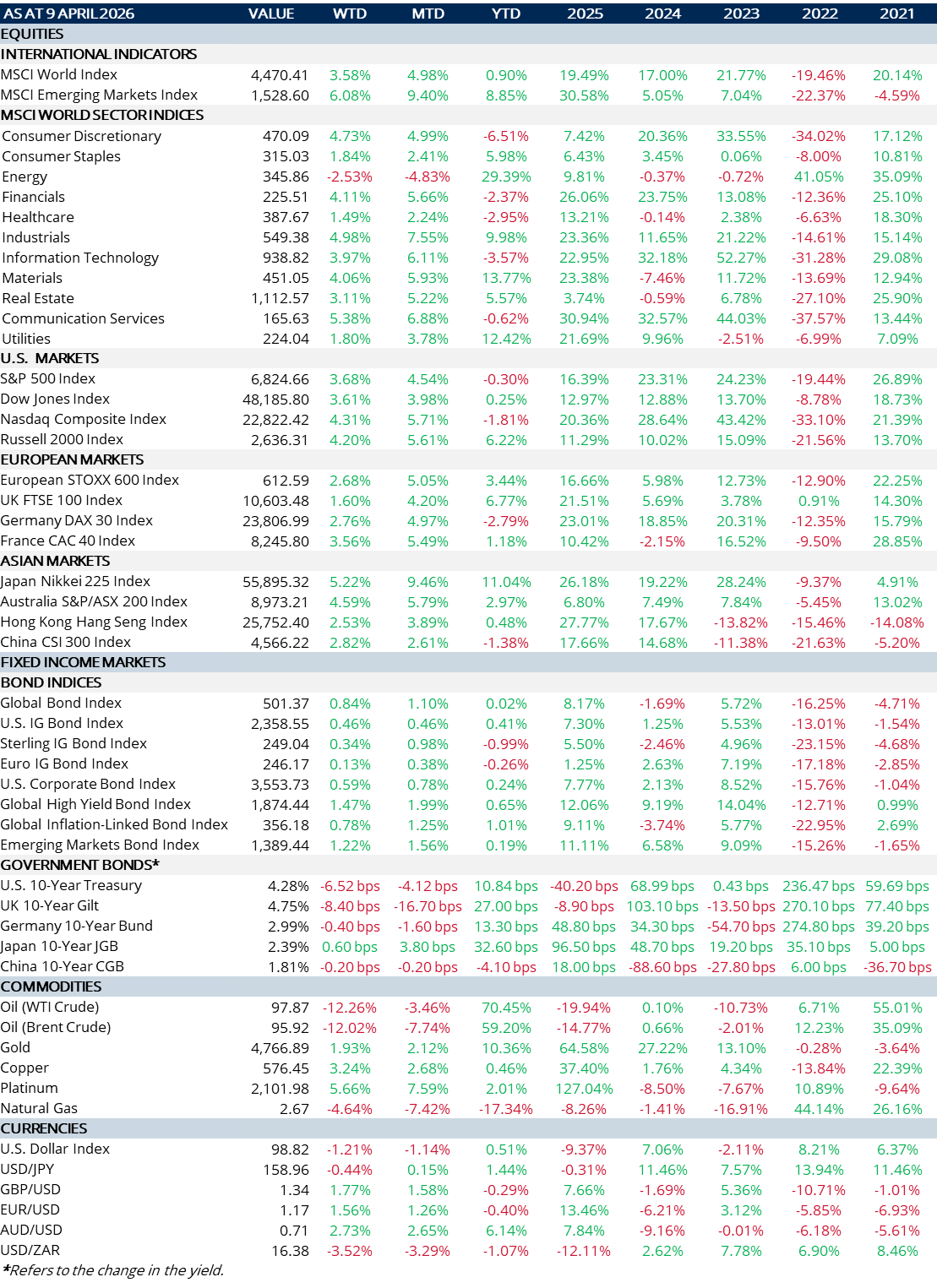
This is a ceasefire, not a resolution. It is a suspension of further US/Israeli bombing for a period of two weeks brokered by Pakistani officials. It reduces immediate, short-term downside risk – as expressed by the sharp, relief rally in markets.
The key US demand (announced 7th April) is a “complete, immediate and safe” reopening of the Strait of Hormuz. Meanwhile, Iran has countered with a 10-point proposal. Interestingly, Trump accepted it as a workable basis for negotiation.
Israel is continuing its military activities against Hezbollah in South Lebanon. Iran has already stated this is a breach of the ceasefire terms. If it continues to be a stumbling point, I have no doubt the US will have to “instruct” Israel to desist.
As reported by Reuters (6th April), we have an outline of a two-stage plan:
- Immediate ceasefire and reopening of the Strait
- Finalisation of a broader agreement over the next 15 to 20 days (“The Islamabad Accord”)
The latter is expected to include nuclear curbs from Iran in exchange for sanctions relief and the release of frozen assets.
Markets will be looking for evidence the ceasefire deal is converting into a lasting peace agreement. One key indicator to watch is the number of ships passing through the Strait.
Iran will want to keep its regime intact, maintain limited nuclear capability, retain regional influence, and have sanctions removed. The US will want reduced nuclear risk and stable oil flows through the Strait.
This gives us an indicative timeline: a two-week ceasefire rolling into a 15 to 20 day negotiation window.
The next 30 days are vital and the probability of holding it together is high (over 50%). Trump wants out, mediation channels are strengthening (with Pakistan leading), and broader global involvement is likely.
However, do not underestimate the impact of failure – it will be disproportionately large.
Ultimately, this is not about whether a deal is likely – it is about whether it happens fast enough to prevent macro transmission.
If successful, global geopolitical implications follow. China, Russia, and Europe all sit within the next phase of this evolving landscape.
Market Scenario Timeline
| Horizon | Prob. Of Holding | Oil Scenario (Brent) | Inflation Impact | Rates / Yields | Equity Outcome | Key Transmission Channels |
|---|---|---|---|---|---|---|
| 0 to 30 days | 50+% | $85 to 100 | +0.2 to 0.4pp | Cuts possible; yields lower | Relief rally | Fuel stabilisation |
| 30 to 60 days | 45% | $90 to 110 | +0.5 to 0.9pp | Cuts delayed | Range-bound | Freight inflation begins |
| 60 to 90 days | 30% | $95 to 120 / $110+ | +0.7 to 1.5pp | Hawkish hold | Risk-off | Broader CPI pressure |
| Re-escalation | N/A | $110 to 140+ | +1.5 to 2.5pp | No cuts | Sell-off | Supply chain shock |
| Successful deal | N/A | $80 to 95 | Temporary | Cuts resume | Strong rally | Energy normalises |
Note: “cross-horizon” scenarios are event-driven, not time-driven.
Market Summary…
- The ceasefire has triggered a Risk-On relief rally
- The US dollar has corrected quickly
- Oil remains elevated despite pulling back
- Rates have stabilised, but caution remains
- Emerging markets outperformed strongly
- Energy inflation has not fully transmitted into broader markets yet